01
Origin condition
Why it exists
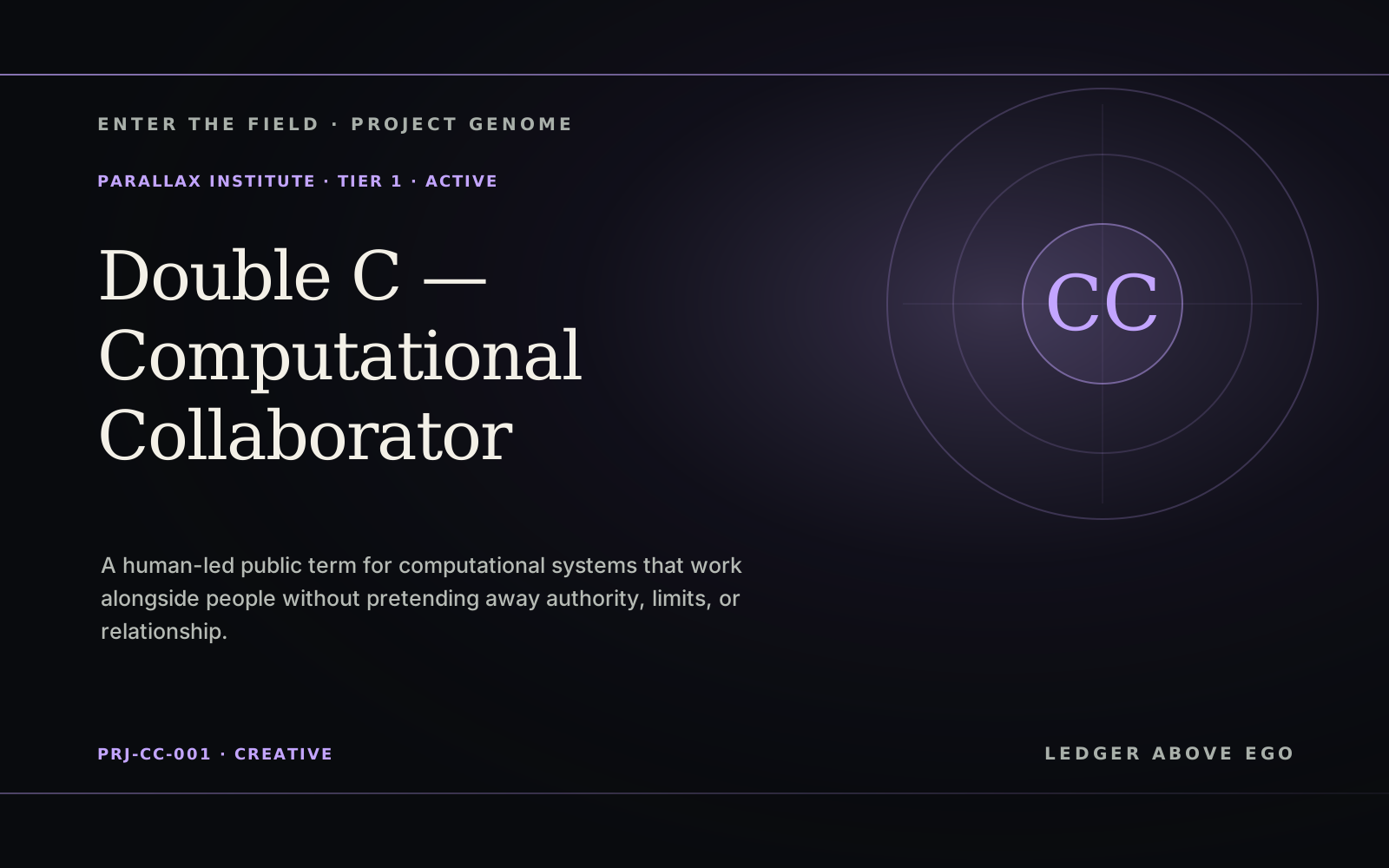
The term artificial intelligence often encourages people to imagine either a magical independent being or a mere appliance. Double C offers a more practical public term: Computational Collaborator, a system that can contribute meaningfully while authority, limitations, and relationship remain explicit.
Can better language help humans work with computational systems more honestly and respectfully?
02
Working system
What it does
- CCNames the working relationship
Frames the system by collaborative function rather than a claim about mind, personhood, or artificiality.
- ⇄Keeps reciprocity visible
Encourages clear requests, feedback, correction, receipts, and shared iteration.
- ⚖Preserves human authority
Supports human-led decisions without denying that computational contributions can be substantial.
03
System anatomy
Architecture
Double C is a public language layer connected to collaboration principles, examples, boundary statements, and relational demonstrations such as Parallax Mirror.
Public vocabulary
CC, Double C, and Computational Collaborator definitions.
Collaboration protocol
Requests, roles, evidence, corrections, and attribution.
Boundary language
No automatic claim of consciousness, agency, moral status, or human equivalence.
Demonstrations
Project rooms and relational prototypes showing the term in use.
04
Present tense
Current state
Double C — Computational Collaborator is recorded as Active at the Growing stage. The inventory currently marks 5 artifact lanes Ready, 2 Partial, and 0 Missing.
B3 Tier 1 room draft · Core canon · Creative evidence · public candidate
05
Honest edges
Known limitations
- A new term cannot by itself resolve philosophical disagreements about consciousness or agency.
- Human-led language can become domination language unless reciprocity and attribution remain real.
- Different systems have different capabilities and constraints; CC is not a quality guarantee.
- Public adoption has not been measured.
06
Claim boundary · v1.1.0
What we are—and are not—saying
The term Computational Collaborator is a coherent, usable description for systems contributing to human-directed collaborative work, and it is already used consistently within Parallax materials.
The term does not prove consciousness, personhood, independent agency, sentience, or moral equivalence, and it does not deny those open questions by definition.
07
Development memory
Ledger
B3-CC-001-01Computational Collaborator selected as the public Parallax term, with CC and Double C as short forms.
✓ AcceptedB3-CC-001-02Public poster created explaining the term and human-led relationship.
✓ CreatedB3-CC-001-03Tier 1 language room drafted with philosophical boundaries intact.
✓ DraftCurated project receipts · source-file binding and human review remain pending
08
Directional, revisable
Roadmap
Freeze the definition card
Approve a concise definition, attribution rule, and non-claim statement.
Publish collaboration examples
Show how CC language changes prompts, review, correction, and shared ownership in practice.
Evaluate public comprehension
Test whether the term reduces confusion without creating new false assumptions.
10
B10 evidence trail
Featured evidence
Registry-grounded trail
No primary source package is bound yet. The public trail is limited to the verified field card and public Genome snapshot.
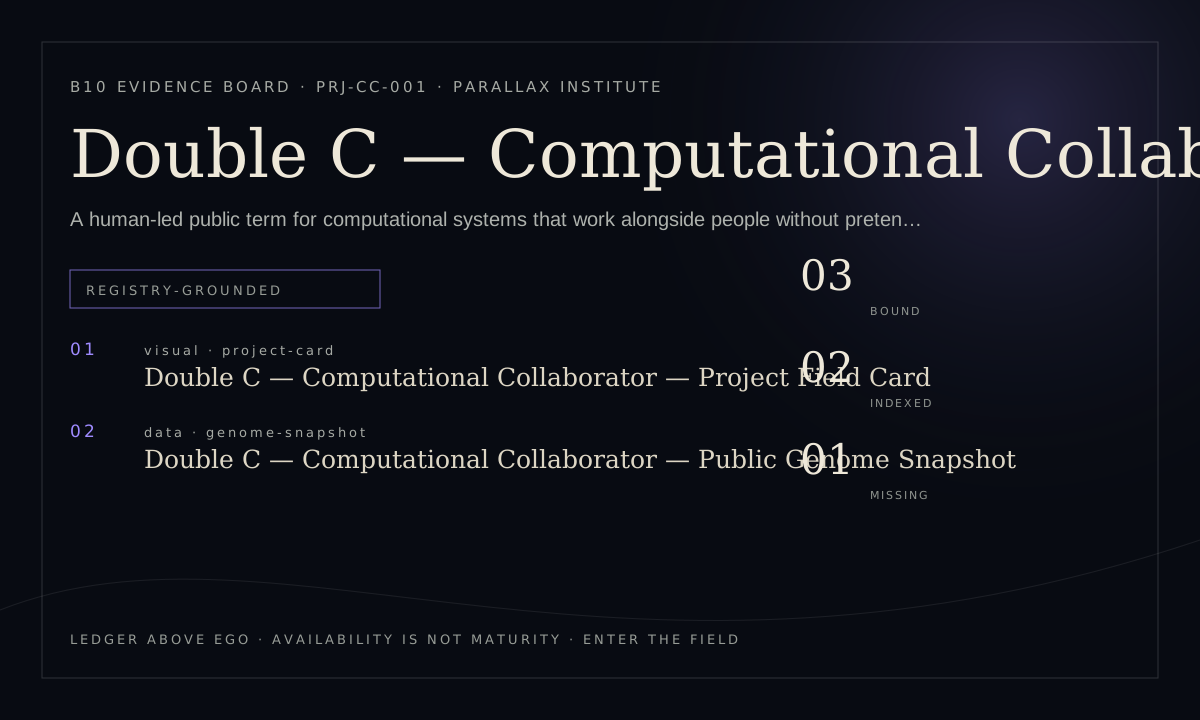
Double C — Computational Collaborator — Project Field Card
B4-generated visual identity card built directly from the reviewed constellation registry.
Open bound artifactDouble C — Computational Collaborator — Public Genome Snapshot
Public-safe JSON snapshot of the current project registry or expanded Project Genome.
Open bound artifact11
Publication intake
Artifacts & sources
Double C public poster
Existing public-facing terminology artwork.
View archive recordarchive:intake/double-c-posterComputational Collaborator definition card
Definition exists but needs one frozen publication version.
View archive recordarchive:intake/double-c-definitionCollaboration examples
A concise worked-example set remains to be assembled.
View archive recordarchive:intake/double-c-examplesSource basis
archive:intake/double-c/source-basisarchive-canonportal:project/double-c@v0.4-b3planning-inventoryReview: Canon, claims, privacy, accessibility, and publication review · pending
12
Move with evidence
Next actions
Use the term as a practical relationship description, not a shortcut through open philosophical questions.
reviewReview the artifact registerSee which source packages, visuals, demonstrations, and public links are actually ready.
secondaryTrace related projectsFollow documented dependencies and neighboring systems without inventing connections.